Call centers are under more pressure than ever. Customers expect instant, accurate answers, 24/7, across multiple channels. At the same time, leaders must control costs, reduce agent burnout, and hit increasingly ambitious KPIs.
This is where call center automation software changes the game. By automating repetitive tasks, intelligently routing interactions, and surfacing real-time insights, automation frees your team to focus on what actually matters: building strong customer relationships. Leveraging Contact center AI driving omnichannel support in the digital era and Virtual Agent Assist for Improving Agent Productivity, modern solutions are transforming agent performance and customer experiences alike.
Modern call centers are embracing smarter tools to keep pace with evolving customer expectations. From automated chat handling to predictive analytics, the right technology can make a huge difference. Organizations exploring cutting-edge computing solutions for improved performance are seeing faster response times and smoother workflows. Combining these innovations with strategic marketing approaches ensures that every customer interaction feels personalized and efficient.
For teams seeking advanced infrastructure, supercomputer-grade processing for call center operations is helping to analyze complex data in real time. This capability allows managers to make informed decisions instantly and reduces the risk of delayed responses that frustrate customers. Meanwhile, leveraging insights from targeted marketing strategies for customer engagement helps call centers anticipate needs, recommend relevant solutions, and improve satisfaction scores.
Investing in proven marketing runners platforms for operational efficiency also supports better agent performance by streamlining campaign tracking and customer outreach efforts. These solutions integrate seamlessly with existing call center systems, enabling teams to focus on high-value interactions instead of repetitive tasks. Furthermore, exploring top financial resources for call center technology investments helps leadership plan budgets wisely, ensuring maximum ROI from automation tools without overextending resources.
By combining intelligent automation, data-driven insights, and strategic marketing, call centers can not only survive but thrive in a digital-first world. Agents are freed to handle more complex inquiries, customers enjoy faster solutions, and companies benefit from measurable efficiency gains. Modern call center automation software is no longer just a tool—it’s the backbone of truly responsive, customer-centric service.
Top 10 Call Center Automation Software Solutions
When choosing the right call center automation software, businesses need solutions that enhance agent productivity, deliver omnichannel support, and provide actionable insights. Here’s a list of the top 10 platforms transforming contact center operations.
1. Bright Pattern – AI-Powered Contact Center Solutions
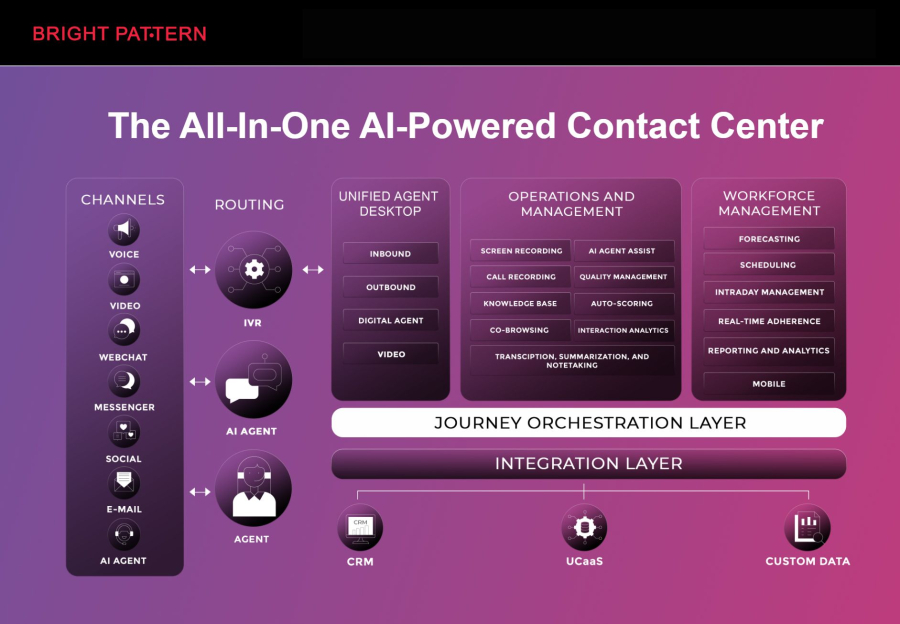
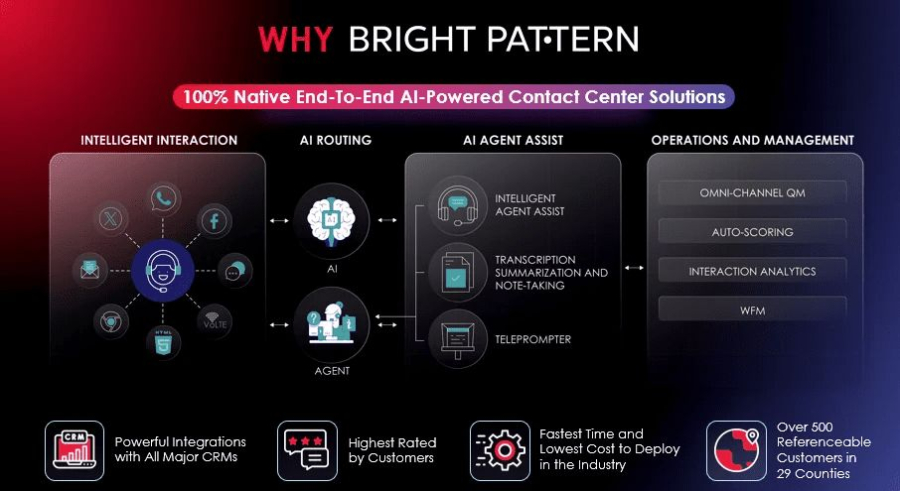
Bright Pattern leads the market with its AI-driven contact center platform. Its call center automation software streamlines interactions, reduces repetitive tasks, and supports agents across multiple channels. Organizations using Bright Pattern benefit from:
- Intelligent routing of customer inquiries to the most qualified agent
- Real-time analytics for monitoring performance and optimizing workflows
- Seamless integration with CRM and other business tools
- AI-powered chatbots and virtual assistants to reduce agent workload
- Omnichannel support across voice, chat, email, and social media
Bright Pattern’s platform is ideal for businesses looking to implement AI contact center solutions that boost efficiency, improve customer satisfaction, and provide a competitive edge.
2. Genesys Cloud
Genesys Cloud offers a comprehensive suite of tools for automating call center operations. Its platform provides predictive routing, AI-driven analytics, and scalable omnichannel support, helping enterprises manage customer interactions more effectively.
3. Five9 Intelligent Cloud Contact Center
Five9 provides cloud-based call center automation software with AI capabilities to improve agent productivity. Key features include virtual agents, real-time reporting, and integration with leading CRMs to streamline workflows.
4. NICE inContact CXone
NICE inContact CXone delivers AI-powered contact center solutions that enhance customer experience and reduce operational costs. Its software includes omnichannel routing, workforce optimization, and automated interaction analytics.
5. Talkdesk CX Cloud
Talkdesk offers intelligent automation features designed to increase agent efficiency. Its platform includes AI-powered virtual assistants, integrated reporting dashboards, and robust CRM connectivity.
6. RingCentral Contact Center
RingCentral provides cloud-based call center automation software that supports omnichannel customer interactions. Features include automated call distribution, AI-assisted agents, and advanced analytics for performance monitoring.
7. 8x8 Contact Center
8x8 combines AI, analytics, and cloud communication tools in one platform. It enables businesses to automate workflows, improve agent productivity, and provide a consistent customer experience across all channels.
8. Cisco Contact Center Solutions
Cisco offers a suite of call center automation software with AI capabilities for intelligent routing, real-time insights, and agent assistance. Its solutions are scalable and integrate with enterprise systems.
9. Avaya OneCloud CCaaS
Avaya provides cloud contact center solutions designed to simplify operations while improving service quality. Features include AI-driven automation, omnichannel support, and agent performance optimization.
10. Talkdesk for Omnichannel Support
Talkdesk’s platform focuses on delivering AI-assisted contact center solutions that improve response times, reduce agent burnout, and provide actionable insights through advanced analytics.
What Is Call Center Automation Software?
Call center automation softwareis a set of tools that use rules, workflows, and AI to handle routine contact center tasks with minimal human intervention. Instead of agents manually performing every step of a customer interaction, software takes over repetitive work and guides agents through the rest.
Automation can touch every part of the call center, including:
- Inbound and outbound call handling
- Interactive voice response (IVR) and self service menus
- Automatic call distribution (ACD) and intelligent routing
- Ticket creation, categorization, and prioritization
- After call work (ACW) such as notes and dispositions
- Quality monitoring and performance analytics
- Proactive notifications and callbacks
The result is a more efficient, more consistent, and more scalable operation that can deliver a better experience at lower cost.
Key Benefits of Call Center Automation
Automation is not just about cutting costs. Done well, it creates a win win situation for customers, agents, and the business.
1. Faster Response and Resolution Times
Speed matters in customer service. Automation accelerates every stage of the interaction:
- Automated call routingconnects customers to the right queue or agent based on skills, language, or priority.
- Self service optionslet customers solve simple issues themselves without waiting on hold.
- Pre populated customer datagives agents context the moment the interaction starts, reducing handle time.
Faster service directly improves customer satisfaction and reduces queue times for everyone else waiting.
2. Higher Agent Productivity and Engagement
Agents spend a surprising amount of time on low value tasks: searching for information, typing repetitive notes, or navigating multiple systems. Automation changes that.
- Screen popsautomatically display relevant customer records when a call connects.
- Guided workflowswalk agents step by step through complex processes, reducing errors and rework.
- Automated wrap upcan log dispositions, update fields, and send follow up emails with a single click.
By removing friction and busywork, agents can handle more interactions per hour, focus on higher value conversations, and experience less burnout.
3. Consistent, High Quality Customer Experiences
Customers expect consistent treatment regardless of which agent they speak with or which channel they use. Automation helps standardize that experience.
- Standardized scripts and promptsensure key questions are always asked and key disclosures are always made.
- Automated workflowsenforce your best practices across the team.
- Quality monitoring toolscan automatically flag calls for review based on predefined criteria.
Consistency reduces risk, supports compliance, and strengthens your brand.
4. Lower Operational Costs
Automation lets you serve more customers with the same or fewer resources. Some common efficiency gains include:
- Reduced average handle time (AHT) through faster data access and guided flows.
- Lower call volumes as self service deflects routine inquiries.
- Optimized staffing thanks to more predictable workloads and better analytics.
Over time, these improvements can significantly reduce cost per contact while maintaining or even improving service levels.
5. Richer Data and Better Decision Making
Automated systems capture detailed interaction data by default. Instead of manually compiling reports, leaders can access live dashboards that show exactly what is happening in the contact center.
- See call volumes, wait times, and abandonment in real time.
- Identify bottlenecks in workflows or IVR menus.
- Spot training needs through trends in call reasons or escalations.
This level of visibility makes it easier to tune processes, justify investments, and demonstrate the impact of your team.
Core Features of Call Center Automation Software
Not all solutions are the same, but most modern platforms use a common set of capabilities. Understanding these core features helps you design an automation strategy that fits your goals.
Interactive Voice Response (IVR)
AnIVRsystem automatically answers calls, plays recorded messages, and guides callers through menu options using key presses or speech recognition.
- Route callers to the right department or queue.
- Offer self service for common tasks like checking balances, updating details, or tracking orders.
- Collect data (for example, account numbers or language preference) before handing off to an agent.
A well designed IVR reduces transfer rates, shortens handle times, and filters out calls that do not need an agent at all.
Automatic Call Distribution (ACD) and Intelligent Routing
ACDsystems automatically distribute inbound calls to available agents based on rules you define. Intelligent routing builds on that with more advanced logic.
- Skills based routingmatches callers with agents trained on specific topics.
- Priority based routinggives VIP customers or urgent issues faster access.
- Data driven routingcan factor in customer history, channel, or campaigns.
Smart routing improves first contact resolution (FCR) and boosts both customer satisfaction and agent confidence.
AI Powered Virtual Agents and Chatbots
Modern automation often includes conversational AI that can understand and respond to natural language. These virtual agents can operate on voice, chat, or messaging channels.
- Answer frequently asked questions automatically.
- Gather preliminary information before transferring to a human.
- Operate 24 / 7 without staffing overhead.
When integrated carefully, AI virtual agents extend your support capacity while keeping complex or sensitive conversations with live agents.
Workflow and Process Automation
Workflow automation tools orchestrate the steps required to resolve a customer request across systems and teams.
- Automatically create and update tickets in your CRM or help desk.
- Trigger follow up tasks, approvals, or escalations based on business rules.
- Send notifications or confirmation messages to customers and internal teams.
This reduces manual data entry, cuts down on errors, and ensures that no step is missed.
Agent Assist and Knowledge Automation
Agent assistfeatures use AI and knowledge management to support agents during live interactions.
- Real time suggestions for next best actions or troubleshooting steps.
- Automatic retrieval of relevant knowledge articles based on call context.
- Dynamic scripts that adjust based on customer responses.
This shortens onboarding time for new agents and raises the performance of the entire team.
Analytics, Reporting, and Quality Automation
Call center automation software typically includes advanced reporting and quality features, such as:
- Dashboards with real time and historical KPIs.
- Automated call recording and transcription for review.
- Speech and text analytics to detect sentiment, keywords, or compliance phrases.
Automated quality monitoring helps leaders quickly find coaching opportunities and recognize top performers.
Use Cases: Where Automation Delivers the Biggest Impact
Automation can benefit nearly every call center workflow, but some use cases deliver especially strong returns.
1. High Volume, Low Complexity Inquiries
Examples include password resets, order status checks, shipping updates, or account balance inquiries. These follow predictable patterns and are perfect for:
- IVR self service.
- Chatbots or virtual agents.
- Automated status notifications.
Deflecting even a portion of these calls to automation can free a significant amount of agent capacity.
2. Proactive Customer Communications
Instead of waiting for customers to contact you, automation can proactively keep them informed.
- Automated reminders for appointments, renewals, or payments.
- Proactive alerts about delays, outages, or service changes.
- Follow up surveys after interactions to capture feedback.
Proactive communication reduces inbound volumes and builds trust by showing customers you are one step ahead.
3. Collections, Renewals, and Sales Campaigns
Outbound campaigns benefit strongly from automation.
- Automated dialers can place calls, detect voicemail, and connect answered calls to agents.
- Scripts and workflows guide agents through compliant, effective conversations.
- Automated follow up tasks ensure consistent, timely outreach.
This structured approach boosts conversion rates and ensures no lead or account is overlooked.
4. Multichannel and Omnichannel Support
Customers increasingly switch between phone, email, chat, SMS, and social channels. Automation helps you manage this complexity.
- Unified queues automatically route interactions from all channels.
- Templates and macros provide consistent, efficient responses.
- Cross channel workflows maintain context if a conversation moves from chat to voice.
The result is a seamless experience from the customer perspective and a manageable workload for your team.
Key Metrics to Track When Automating Your Call Center
Measuring the right metrics ensures your automation delivers real business value. Some important KPIs include:
| Metric | What It Measures | Automation Impact |
| Average Handle Time (AHT) | Average time spent on each interaction, including talk and after call work. | Should decrease as workflows, data access, and wrap up are automated. |
| First Contact Resolution (FCR) | Percentage of issues resolved in a single interaction. | Should improve with better routing, knowledge, and agent assist. |
| Self Service Containment Rate | Share of inquiries fully resolved by IVR or bots without agents. | Higher containment indicates effective self service design. |
| Customer Satisfaction (CSAT) | Customer rating of their experience. | Should rise when speed, clarity, and consistency improve. |
| Net Promoter Score (NPS) | Likelihood customers would recommend your brand. | Strong service experiences positively influence NPS. |
| Cost per Contact | Total operating cost divided by number of handled interactions. | Typically decreases as automation scales service more efficiently. |
How to Implement Call Center Automation Successfully
Successful automation is not about turning everything into a robot driven process. It is about combining the strengths of technology and people. A thoughtful rollout plan helps you maximize benefits while keeping customers and agents on your side.
1. Start with Clear Objectives
Before choosing tools or designing flows, define what you want automation to achieve. For example:
- Reduce average handle time by a specific percentage.
- Increase self service usage for the top call drivers.
- Improve service levels during peak hours without adding headcount.
Clear goals guide every decision and make it easier to measure success.
2. Map Your Customer Journeys and Call Drivers
Analyze your current interaction data to identify high volume, repeatable processes. Map each journey step by step to find where automation can help.
- Which reasons drive the most calls or chats?
- Which steps are repetitive and rules based?
- Where do errors, delays, or escalations often occur?
This exercise highlights quick wins and prevents you from automating broken or confusing processes.
3. Prioritize High Impact, Low Complexity Automations First
Begin with use cases that are simple, frequent, and low risk. Examples include:
- Automated password reset flows.
- Appointment reminders and confirmations.
- Basic order status inquiries.
These early wins build confidence, free agent capacity, and create momentum for more advanced automation.
4. Design Customer Friendly Experiences
Automation should feel effortless, not frustrating. Keep the customer experience front and center:
- Keep IVR menus clear and concise with limited depth.
- Always offer a path to a live person, especially for complex or emotional issues.
- Use plain language and avoid internal jargon.
User testing, even with a small group, can reveal friction points before you roll out at scale.
5. Involve Agents Early and Often
Agents are closest to your customers and your processes. Involving them in the design and testing stages yields better results and higher adoption.
- Ask for feedback on scripts, flows, and prompts.
- Train agents thoroughly on new tools and explain the benefits for them.
- Collect input after launch and iterate on the experience.
When agents see automation as a helpful assistant rather than a threat, they become your strongest champions.
6. Integrate with Your Existing Systems
The power of automation multiplies when your call center platform connects seamlessly to your CRM, ticketing system, and other business applications.
- Ensure customer data is synchronized and available in one view.
- Use integrations to avoid double entry and manual updates.
- Design workflows that automatically move data between systems.
Strong integration reduces complexity for agents and increases the reliability of your data.
7. Launch Gradually and Iterate
Instead of a big bang rollout, consider a phased approach.
- Start with a single team, region, or call type.
- Monitor performance and customer feedback closely.
- Refine prompts, routes, and workflows based on results.
This controlled rollout lets you capture value early while minimizing risk and disruption.
Best Practices for Maximizing the Value of Automation
Once your initial automations are live, a few ongoing practices will help you keep improving.
Continuously Optimize Your IVR and Bot Flows
Customer needs shift, and your processes will evolve over time. Review performance data regularly.
- Identify where customers frequently drop out of self service.
- Update menus and flows to reflect new services or policies.
- Use simple language and test changes with real users.
Even small improvements can significantly boost containment and satisfaction.
Balance Automation with the Human Touch
Automation is most powerful when it amplifies human strengths. Design your strategy around this partnership.
- Use automation for speed, accuracy, and data handling.
- Use humans for empathy, judgment, and complex problem solving.
- Ensure seamless handoffs from bots to agents with full context.
This balance keeps experiences efficient without feeling cold or impersonal.
Invest in Training and Change Management
As your automation capabilities evolve, so will the skills required of your agents and leaders. Support this evolution intentionally.
- Offer training on new tools, analytics, and processes.
- Encourage agents to share automation ideas from the front line.
- Recognize and reward teams that embrace new ways of working.
A culture that sees automation as an opportunity will continuously find new ways to delight customers.
Protect Data and Support Compliance
Call centers often handle sensitive information. As you automate, maintain a strong focus on privacy and compliance requirements relevant to your region and industry.
- Apply appropriate security controls to recordings, transcripts, and analytics.
- Align call flows and scripts with applicable regulations.
- Review automations regularly to ensure they continue to meet compliance standards.
Thoughtful governance builds trust with both customers and internal stakeholders.
Future Trends in Call Center Automation
Call center automation continues to advance rapidly, unlocking new possibilities for service excellence. Some emerging trends include:
- Deeper AI integrationthat can summarize calls in real time, detect emotion, and recommend personalized next steps.
- Proactive customer servicewhere systems anticipate needs and resolve issues before customers notice them.
- More unified experiencesacross voice, digital, and in person touchpoints supported by shared data and workflows.
Organizations that adopt these capabilities strategically will be well positioned to deliver standout customer experiences at scale.
Conclusion: Turning Your Call Center into a Strategic Advantage
Call center automation software is more than a set of tools. It is a modern way of operating that combines technology, people, and process to deliver faster, smarter, and more human support.
By automating routine tasks, supporting agents with intelligent guidance, and giving leaders clear visibility into performance, you can:
- Reduce costs while improving service quality.
- Boost agent engagement and retention.
- Delight customers with quick, consistent, and convenient experiences.
With a clear strategy, thoughtful implementation, and a commitment to continuous improvement, call center automation can transform your customer service from a cost center into a powerful driver of loyalty and growth
